Posts

Showing posts with the label Stakeholders

Seven of my books on Sustainable Development great reads for the summer, birthday and xmas presents

Image
 Dear Friends Below are seven of my books since the Rio+20 Conference, which you may find useful if you are engaged in sustainable development, climate change, lobbying at the UN, new technologies, and the history of intergovernmental negotiations. Chris Specne and I are working on a new book which will be out for the HLPF in 2027 called  Political Heroes of the Environment: Profiles in Courage. The second in the Heroes series. We are looking for a production company that might be interested in pitching this to the streaming services.  This book provides a step-by-step, insider's guide to lobbying and engaging successfully at the United Nations. It reveals how the United Nations, which plays such a key role on issues from climate change to pollution of our air, land and sea, really works.   From the very basic question of how to ensure you can even attend the event, this book offers hard-to-find information to help readers through this lab...

New Climate Realities in the Boardroom: What Directors Are Really Saying (and Doing)

Image
Image courtesy: Artist: Patrick Chappatte; First Published: World Meteorological Organisation Calendar Guest blog by Helle Bank Jรธrgensen , GCB.D, NACD.DC ( originally published here ) Global Managing Director, Board Development, Board Intelligence and Founder Competent Boards. #1 Amazon Bestselling Author, Global Keynote Speaker. If you serve on a board today, you can feel the ground shifting under your feet. The rhetoric is louder, the politics are harsher, the data are starker, and yet, behind the headlines, many boards are getting on with it. They’re changing how they talk, how they budget, and how they govern. That was the unmistakable signal from the recent Competent Boards Global Forum conversation we convened with directors and senior leaders spanning Asia, Africa, North America, South America and Europe. Here’re the top 5 distilled reality from the conversation. It’s messy, nuanced, and actionable. Pledges don’t buy trust anymore. Proof does. Not long ago, boards were appl...

HLPF Side event - register now - 6th of July (6-7:30pm EDT) Governance of disasters risk reduction and resilience to boost the sustainable development goals

Image
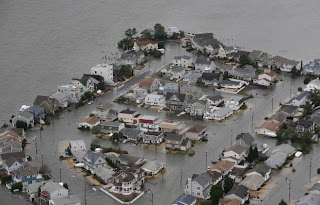
The Sustainable Development Goals recognizes the critical role that the interlinkages between the different goals and targets play. Disaster risk reduction and resilience (DR3) is a cross-cutting issue in the context of sustainable development and the Sustainable Development Goals (SDGs), specifically SDG 13.1, which aims to “strengthen resilience and adaptive capacity to climate-related hazards and natural disasters in all countries.” The effective implementation of SDG 13.1 requires responsive, inclusive, participatory and representative decision-making at all levels (SDG 16.7). This SDG 17 project has been reviewing two developed and two developing country approaches to governance of disaster risk reduction and resilience.   Within the project we have looked at the e ngagement of stakeholders in drawing up disaster plans at all levels of government. We have also reviewed the available indicators that might be used. We will discuss how to approach stakeholder identificati...

SNOW ANGEL - UNC STAKEHOLDER ENGAGEMENT METHOD

Image
  On the 10th of November UNDESA held a workshop for member states that are intending to present their Voluntary National Reviews to the UN High Level Political Forum in 2021. A number of experts were invited to attend the Knowledge Exchange for 2021 VNR Countries including Felix Dodds from the Water Institute at the University of North Carolina. He presented the UNC Snow Angel approach to stakeholder engagement to the workshop as follows. This approach is based on the work of the University of North Carolina as part of a six-university research project on Governance of Disaster Risk Reduction and Resilience for Sustainable Development. The theory of change we are advocating is that the involvement of stakeholders in decision making creates better-informed decisions that are more likely to garner support and implementation from impacted stakeholder groups and individuals. We have developed the UNC Snow Angel approach for stakeholder engagement which draws inspiration from the ecolo...

Is Civil Society arguing itself out of political space?

Image
As some of you will know I have a new book out S takeholder Democracy: Represented Democracy in a Time of Fear.    (other contributors to the book were:  Jan-Gustav Strandenaes, Carolina Duque Chopitea, Minu Hemmati, Susanne Salz, Bernd Lakemeier, Laura Schmitz, and Jana Borkenhagen). This article is now on Inter Press Service  News Agency here.   The book’s theory of change is very simple involving stakeholders in the decision making makes better-informed decisions and that those decisions are more likely to be implemented with those stakeholder’s support either singularly or in partnership. The book places Stakeholder Democracy within the spectrum of Representative to Participatory Democracy. It argues that we need to strengthen represented democracy in a time of fear through engaging stakeholders. It recognizes that in many places politicians are no longer believed but they need to make difficult decisions. To help them do this engaging with the ...

Publication history 2018 and Plans for 2019

Image
Another busy year on publications. I had two books out: Power to the People: This book explores the role that the Young Liberal Green Guard had on UK politics in the 1980s. It aims to inspire future young politicians of whatever political views the truth of Margaret Meads statement that: “Never doubt that a small group of thoughtful, committed citizens can change the world; indeed, it's the only thing that ever has.” Reviews included: By Lord Chris Rennard “The 1980s is a fascinating period in British politics and Felix Dodds played a fascinating role in that period and which he writes extremely well about. The group of people who were close to him then have stuck together and have mostly used their political and campaigning skills to great effect ever since. It took courage for Young Liberals to support a Labour candidate because he was openly gay and the SDP's sitting MP appeared to be homophobic, but I think that they were right even though it caused ruction...