What the informal dialogues will not tell you about who actually becomes UN Secretary-General.

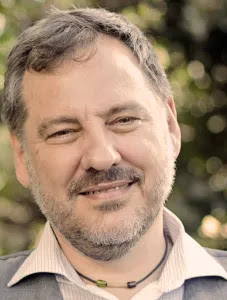
Guest blog by Lenni Montiel Senior UN Development Leader (Ret.) | Former UN Assistant Secretary-General |UNDP Resident Representative I Governance, Public Policy & Multilateral Diplomacy | Leadership Advisor & Trainer I Chevening Scholar
What the informal dialogues will not tell you about who actually becomes UN Secretary-General.
The public sees the dialogues. The decision happens elsewhere.
Watch it carefully, and you begin to understand how the institution actually functions.
As the informal dialogues with candidates begin, attention naturally focuses on visions, priorities, and leadership styles. Most public analysis focuses on those elements.\
But there is another way to read this process.
👉 It reveals the political architecture of the UN. 👉 It illustrates the difference between formal procedure and political reality.
What the process reveals
The Security Council is decisive
The General Assembly appoints the Secretary-General, but only after recommendation by the Security Council.
Within that structure, the P5 retain veto power.
No candidate, woman or man, can succeed without a minimum level of acceptability among them.
Regional politics matter
Informal regional expectations, bloc dynamics, and diplomatic negotiations shape the field long before public dialogues begin.
Candidacies are often influenced as much by geopolitical positioning as by individual qualifications.
Visibility does not equal viability
Public dialogues test communication skills, policy fluency, and popularity.
But decisive conversations often take place elsewhere:
- in capitals,
- through bilateral exchanges,
- and within quieter diplomatic channels
Reform rhetoric meets institutional reality
Every candidate speaks about reform.
But the next Secretary-General will inherit a system constrained by:
• Member State divisions • Financial pressure • Mandate overload • Bureaucratic inertia
The gap between ambition and institutional capacity is structural.
What to watch for
👉 Not only what candidates say, but how Member States respond.
👉 Not only declared priorities, but signals of P5 convergence. 👉 Not only vision statements, but indications of political viability.
The selection process is not a conventional job interview.
Nor is it simply a contest for the most publicly visible candidate.
It is ultimately a political negotiation among sovereign states.
The outcome will likely reflect not necessarily the most compelling vision, but the candidate around whom sufficient political alignment can emerge.
That is not cynicism.
It is the operational reality of multilateral governance.
Understanding this process is itself a form of institutional literacy.
Can the current selection process realistically produce a truly reform-minded Secretary-General?
If you found this analysis useful, share it with colleagues, students, or young professionals trying to better understand how multilateral institutions actually function.

Comments
Post a Comment